A few months ago, at a dinner party, someone asked me the question every writer dreads.
“So what kind of books do you write?”
I gave the standard answer. Space opera. Collapsing empires, starships, the occasional alien civilisation with opinions about humanity. The questioner nodded politely, the way you nod when someone describes their fantasy hockey league, and the conversation moved on.
But the question stuck with me on the drive home, because my answer was wrong. Or at least incomplete. Genre is the furniture. It’s not the house.
What I actually write — what I’ve apparently been writing for ten years and twenty novels without quite admitting it to myself — are stories about the moment when a person has to choose, and every option on the table costs something they can’t get back.
That’s it. That’s the whole thing. Everything else is set dressing.
Let me back up, because I think I know where this comes from.
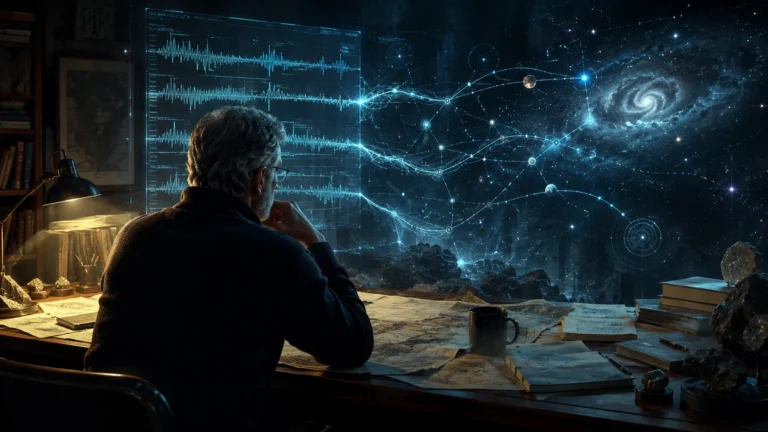
Before I wrote fiction, I spent forty years as a geophysicist in the petroleum industry. People imagine that work as technical, and it is, but here’s what they don’t imagine: almost every meaningful decision gets made with incomplete information.
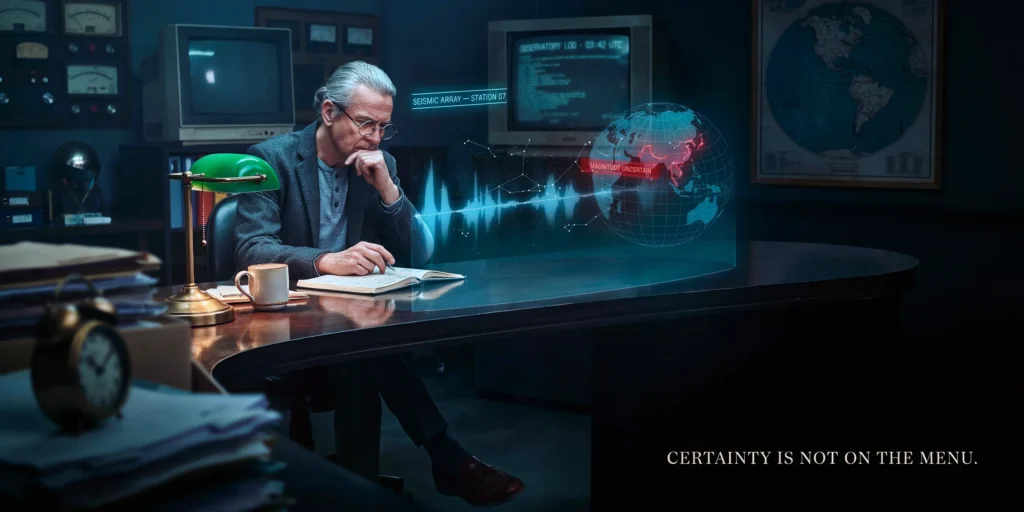
You’re looking at seismic data — fuzzy, ambiguous, expensive pictures of rock you will never see with your own eyes — and someone is asking you whether to drill. Millions of dollars hang on your answer. Careers, sometimes. And you cannot say “let me get back to you when I’m certain,” because certainty is not on the menu. It never was.
You make the call. Then you live with it.
I didn’t realise until much later how deeply that shaped me. Forty years of that teaches you something most fiction conveniently forgets: in real life, the hard part isn’t figuring out the right answer. The hard part is acting when there isn’t one — when every path forward takes something from you, and standing still takes even more.
So when I sat down to write science fiction, that’s what came out. I didn’t plan it. There was no whiteboard session where I mapped out my themes. I just wrote the stories that felt true, and years later, looking back across two series, I noticed they all had the same shape.
It was a bit like discovering your own fingerprint. It was there the whole time. You just never thought to look.
Here’s the thing I’ve come to believe about fiction: clean victories kill stories.
You know the kind I mean. The hero faces a terrible dilemma, agonises for a chapter, and then — surprise — a third option appears, letting them have everything. The crew is saved, the enemy is defeated, the moral question quietly evaporates, and everyone gets a medal.
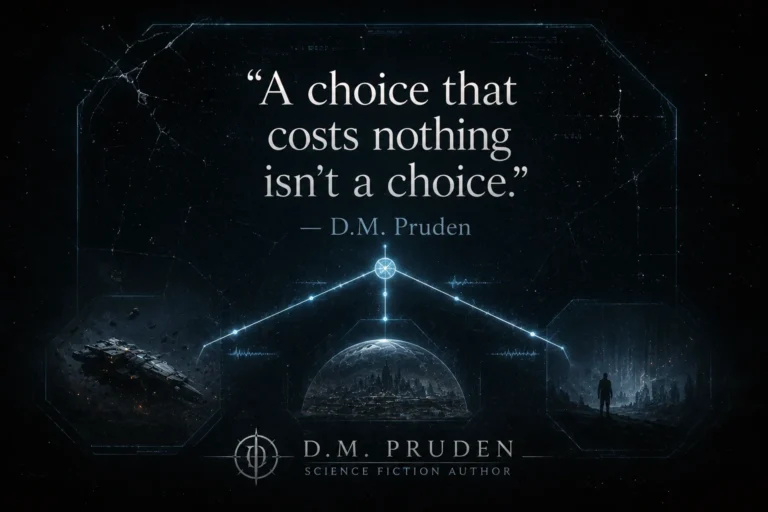
I understand the appeal. It’s comfortable. But it’s also a lie, and readers can feel the lie even when they can’t name it. A choice that costs nothing isn’t a choice. It’s a plot beat wearing a choice’s clothing.
Cost is what brings a story alive. The decision that saves the ship but not everyone on it. The truth that protects one person by endangering another. The moment when doing the right thing and doing the survivable thing point in opposite directions, and the character has to pick one and carry it.
That’s where stories live, in my experience. Not in the solution — in the cost.
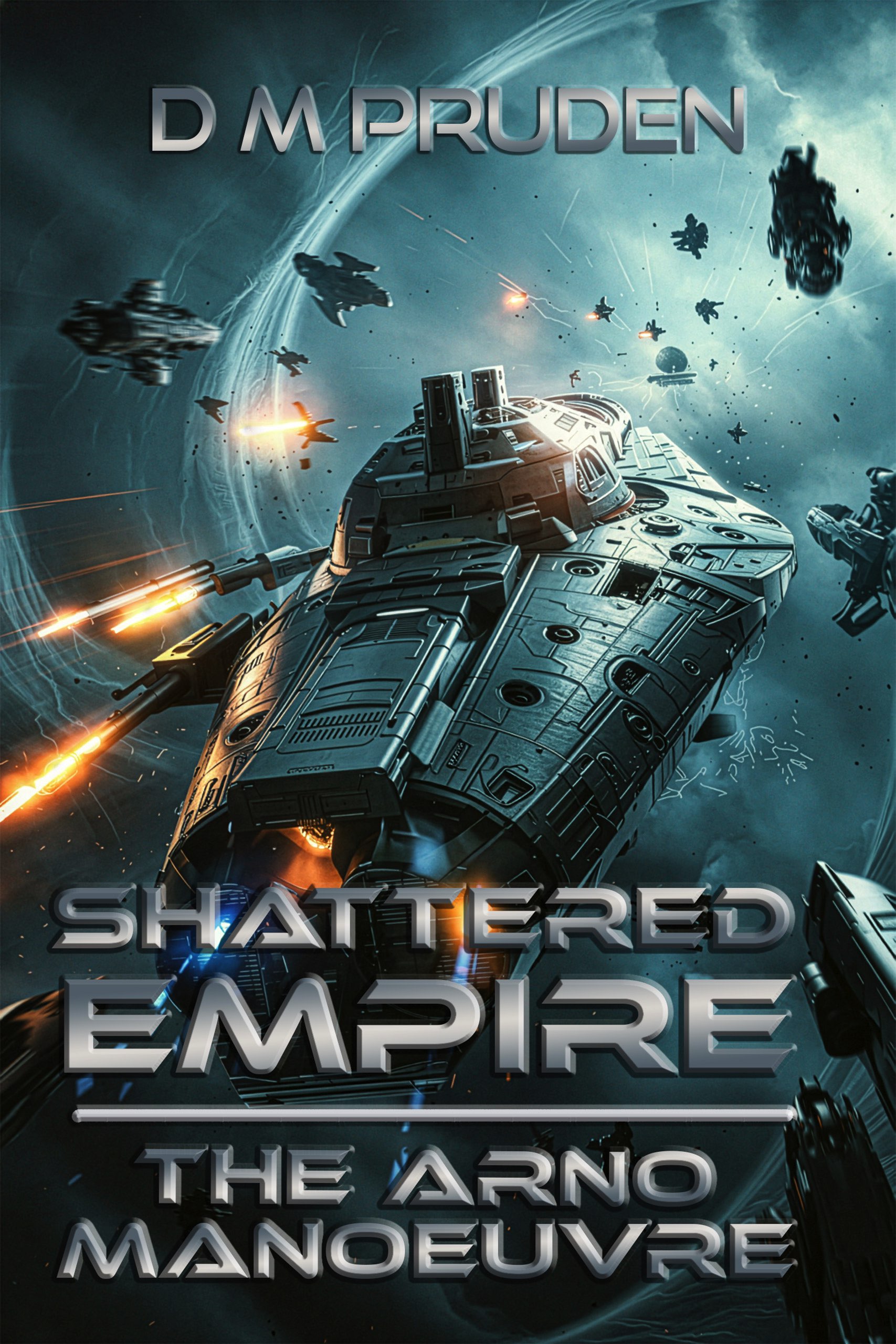
In my Shattered Empire series, there’s an officer who gets handed authority he never asked for, in the middle of a collapse nobody can stop. Every order he gives reshapes lives, and refusing to give orders reshapes them too. There’s no version of his job where his hands stay clean. The question isn’t whether he’ll pay a price. It’s which one.
In the Destin Chronicles series, there’s a doctor whose deepest instinct — to protect, to heal, to not look away — is exactly the thing the system around her punishes. Her compassion isn’t a superpower. It’s a liability with a body count, and she knows it, and she keeps choosing it anyway.
Different worlds. Different stakes. Same engine. Stories where choices have real consequences, where the consequences don’t politely excuse themselves at the end of the chapter.
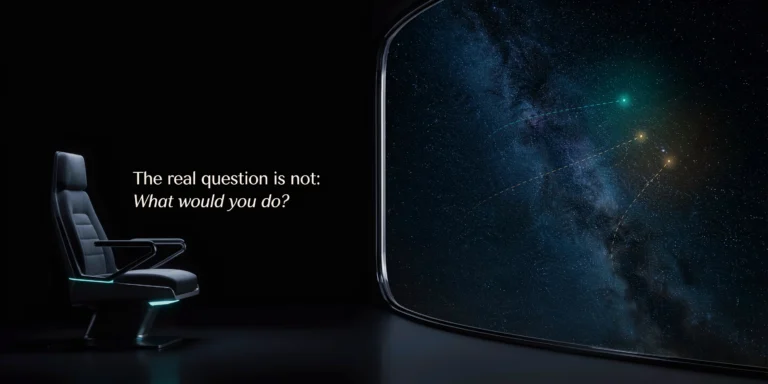
There’s a question people love to ask about fiction like this: what would you do?
It’s a fine question. I’ve asked it myself. But I’ve come to think it’s not the honest one.
“What would you do?” lets you stay outside the moment. You can weigh the options like a philosophy seminar, pick the answer that makes you sound principled, and go refill your coffee. It costs you nothing, which means it teaches you nothing.
The question that actually matters — the one good fiction can ask in a way almost nothing else can — is harder.
Could you live with it?
Not in the abstract. Afterward. At three in the morning, six months later, when the adrenaline is long gone and what’s left is just you and the memory of what you chose. Could you carry that? Would you still recognise yourself?
That’s the question I want my books to put in front of a reader. Not because I enjoy making people uncomfortable — okay, maybe a little — but because I think it’s the most honest question available. We spend most of our lives never finding out what we’d actually do under real pressure. Fiction is one of the few places we can rehearse it safely. Science fiction about impossible decisions, it turns out, is really just a long, careful rehearsal for being human.
And space opera, of all things, is a surprisingly good vehicle for it. The scale raises the stakes — fleets, planets, civilisations — but the choice always comes down to one person in one room. I’ve started thinking of what I write as space opera with ethical weight. The big ships are real. But the cargo is moral.
I’ll tell you the part that surprises me most.
I didn’t choose this theme. I would never have chosen it. If you’d asked me at the start of all this what my books would be “about,” I’d have said adventure, probably. Wonder. Big ideas. The stuff that made me fall in love with the genre as a kid.
The impossible choices crept in on their own. Book after book, my characters kept arriving at the same kind of crossroads, and I kept refusing to rescue them from it. At some point I had to admit that this wasn’t an accident. It was a conviction I’d been carrying around for sixty-some years without ever writing it down.
Maybe that’s how it works for most writers. You don’t pick your theme. You excavate it. It was laid down decades ago, layer by layer — in my case, somewhere in all those years of making expensive calls on incomplete data and living with the results — and the writing is just the drilling that finally brings it up.
Fitting, I suppose, for a geophysicist.
So that’s my answer now, the one I should have given at that dinner party. I write fiction where every choice costs something. Morally serious science fiction, if you want the formal label, though I promise it’s more fun than that sounds. Stories about competent people in broken systems, doing the best they can with what they have, and finding out — sometimes to their horror — who they really are.
Because that’s the deal, isn’t it? You don’t know who you are until it costs you.
I’m curious about something, and I mean this genuinely: think of a decision in your own life where there was no good option. Not a dramatic one, necessarily. Just a real one. Did you know at the time what it would cost? And looking back — could you live with it?
You don’t have to tell me. But I suspect you just thought of one, and I suspect it took you less than three seconds.
That’s why I write these stories.
For readers who want decisions to matter and consequences to stick.
Start Reading
If you want science fiction where every choice costs something, start here:
- Shattered Empire — military command under impossible pressure, alien technology, and consequences that reshape civilisations.
- The Destin Chronicles — a brilliant doctor, compromised authorities, and a system that punishes compassion.
You can find both series at D.M. Pruden’s official store.
— Doug